A Jumping-Off Point for Music Fans Who Want to Get Into Jazz
Every week on Reddit someone asks:
“I want to get into jazz. Where do I start?”
Here’s my honest answer.
I didn’t come to jazz academically. I wasn’t studying theory or working through a historical checklist.
I was chasing feeling.
These weren’t assignments.
They were companions — albums that stayed with me, front-to-back statements that slowly revealed themselves and never really left.
If you’re new to jazz, don’t approach it like homework.
Approach it like you would any great record.
Put it on. Sit with it. Let it unfold.
These are the albums that opened the door for me.
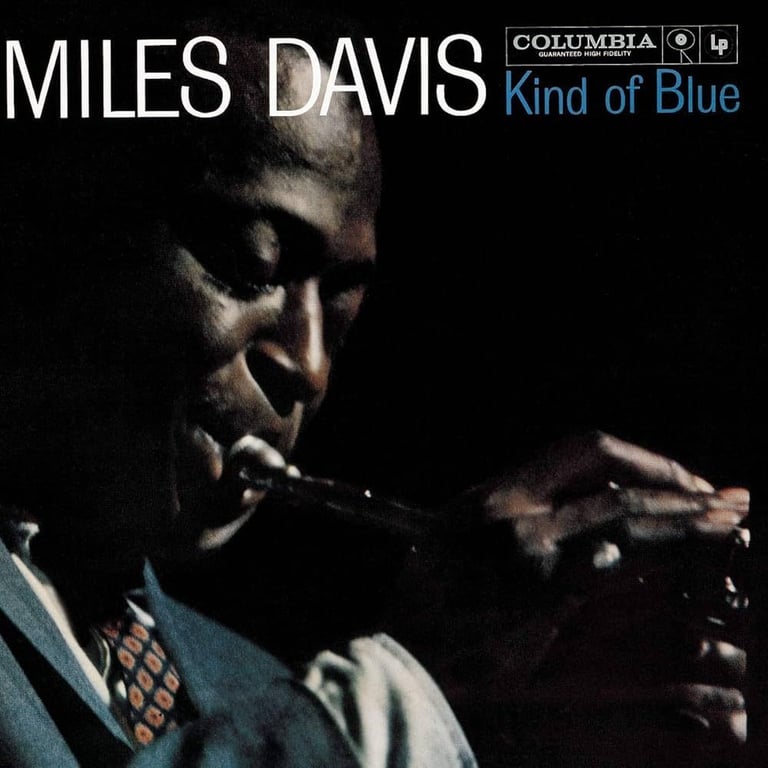
Kind of Blue – Miles Davis (1959)
The gateway.
Miles. Coltrane. Bill Evans. Cannonball.
Minimal rehearsal. Simple modal frameworks. Maximum space.
It’s probably the most popular jazz album ever recorded — over five million copies sold.
The Dark Side of the Moon of jazz.
Its reach is still everywhere — Lexus even features part of it in a recent commercial. That’s how enduring this record is.
It doesn’t feel historical.
It feels permanent.
Blue Train – John Coltrane (1957)
Bluesy hard bop with muscle and melody.
That famous opening horn call — bold and declarative — followed by the band answering back. It’s a door swinging open, and within seconds you know exactly where you are.
Coltrane’s only Blue Note album as a leader.
A one-off that became eternal.
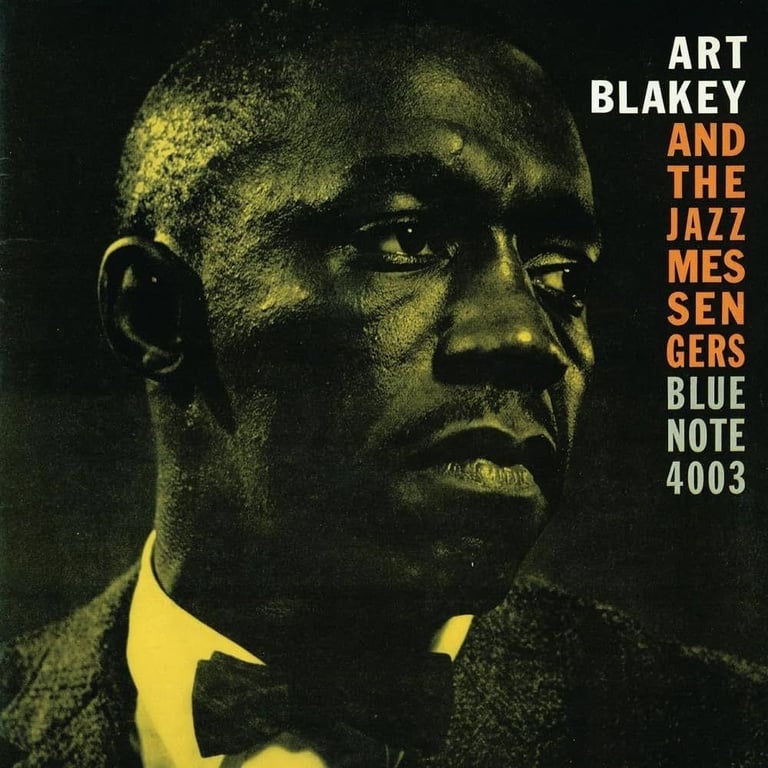
Moanin' – Art Blakey (1958)
Swinging. Blues-based. Urgent.
Blakey was the Dean of Jazz University. Lee Morgan. Wayne Shorter. Freddie Hubbard. The Jazz Messengers launched careers before those players ever led their own bands.
And the piano break at the end of “Moanin’”?
It might be the greatest ending to a song ever recorded.
It doesn’t fade.
It lands.
Bird on Savoy – Charlie Parker (1948)
Before Parker. After Parker.
That’s how saxophone history divides.
These Savoy recordings are bebop ground zero. A young Miles Davis and Max Roach are here too.
Yes, there are a lot of notes.
But what always struck me is how strong the melodies are. Parker isn’t running scales — he’s singing through the horn. Even at that speed, the lines resolve and breathe.
It’s not chaos.
It’s melodic invention moving at high velocity.
Somethin' Else – Cannonball Adderley (1958)
One of those rare records where every player feels essential.
Cannonball leads, but Miles Davis shapes the mood in subtle ways. Art Blakey keeps everything grounded. Hank Jones and Sam Jones lock in underneath it all.
If the earlier records feel fiery, this one feels poised.
Soulful. Cohesive. Complete.
If that’s hard bop at its tightest, the next few records widen the lens.
Sunday at the Village Vanguard – Bill Evans (1961)
One of the greatest trios ever recorded.
Scott LaFaro’s bass doesn’t just support — it converses, answers, pushes.
He died a week later at 25.
The music feels fleeting in the best way — alive, impossible to recreate.
But Not for Me – Ahmad Jamal (1958)
Space. Taste. Control.
Miles cited Jamal as a major influence, and you can hear why. The trio leaves room inside the music. Silence becomes rhythm.
Restraint is power.
Saxophone Colossus – Sonny Rollins (1956)
“St. Thomas” swings with Caribbean lift, and Max Roach’s drum solo dances inside the groove instead of overpowering it.
Then there’s the ballad, “You Don’t Know What Love Is.”
Listen to how Rollins brings the band back in — patient, tender, letting the melody breathe before the rhythm section gently re-enters beneath him.
That control is what hooked me.
Giant Steps – John Coltrane (1960)
The title track is harmonic Everest — fast-moving changes that became a rite of passage for musicians.
But “Naima” was my doorway.
One of my favorite ballads of all time.
That was my first real toe hold into loving jazz. It showed me that vulnerability, not virtuosity, is what makes music stay.
A Love Supreme – John Coltrane (1965)
A four-part spiritual suite by the classic quartet.
It starts simply — Jimmy Garrison’s mantra-like bass line, grounded and repetitive.
Elvin enters quietly.
And away we go.
There’s that searching bass solo in “Pursuance,” and when the band re-enters, they don’t ease back in — they soar.
Then the chant:
“A Love Supreme… A Love Supreme…”
Vocals in jazz — not crooning, not standards, but devotion.
By the end, with Elvin on timpani, the record doesn’t feel like performance.
It feels like testimony.
The final stretch moves into groove and atmosphere.
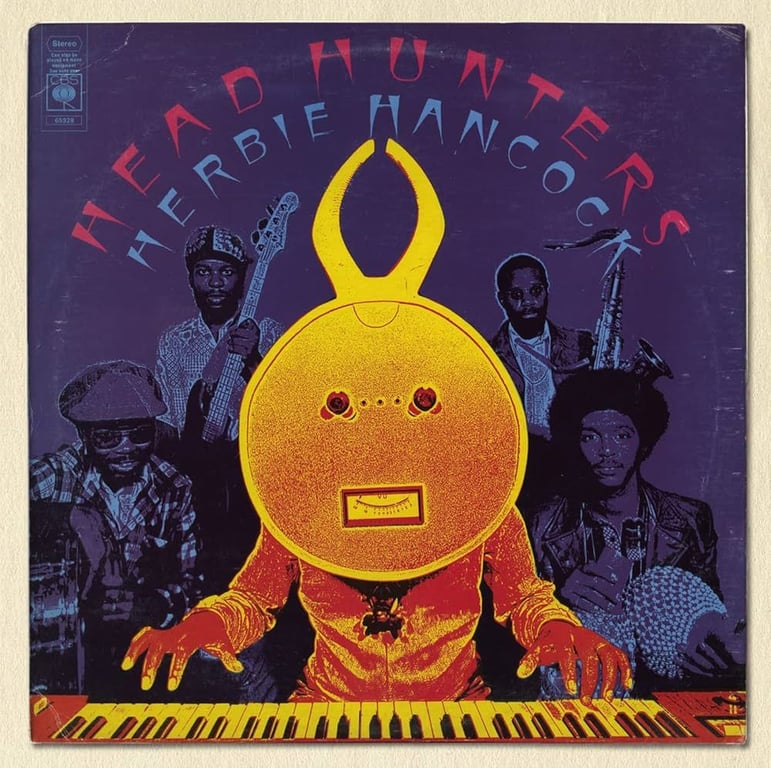
Headhunters – Herbie Hancock (1973)
Groove architecture.
If you love pocket and bass lines that lock in, this is your bridge.
In a Silent Way – Miles Davis (1969)
Electric. Spacious. Meditative.
Less fireworks. More atmosphere.
Midnight Blue – Kenny Burrell (1963)
Late-night guitar perfection.
Turn the lights down and let the tone do the talking.
Ella and Louis – Ella Fitzgerald & Louis Armstrong (1956)
Pure joy.
Two masters completely at ease, trading warmth and phrasing like old friends.
A Go Go – John Scofield (1998)
Modern groove.
A smooth on-ramp if you’re coming from funk or jam bands.
How to Approach Jazz
Don’t binge all 15.
Pick one.
Live with it.
I wasn’t looking at jazz academically.
I was looking for albums that moved me — records that deepened with repeat listens and became part of the room.
If even one of these becomes that for you, you’re in.
And once you’re in, there’s no going back.
PS. If you’re looking for something more mood-driven, I’ve also written about my favorite albums for rainy days and late-night listening.
Learning guitar at 48 has become one of the best ways I reset when life gets heavy. A reflection on stress, music, practice, and finding peace in small daily habits.
While listening to music and thinking through a problem, a quiet phrase came to me: “It’ll be all right. You’re gonna be all right.” A new mantra, born from stillness.

 Made with Bullet